Sunday, March 6, 2016

Is God Angry?

We know that early cultural tribes often prayed to multiple Gods - often having Gods that represented different aspects of life: war, love, justice, etc.   or in other cases represented the spirit within various aspects of nature: mountains, the ocean, trees, etc.   But under either of these schema natural disasters were viewed as a sign that the God's were angry.  In fact even after cultures increasingly went to Monotheism, the belief in one God, it was believed that God was mad when an earthquake or hurricane or a plague came.   I mean think about it, before one understood what germs were or how they spread how do you make sense of a plague coming to a town and wiping out most of the population?   It would seem arbitrary and cruel...like someone was trying to punish.   Before one could know about the plates underneath the earth shifting and causing earthquakes this too would seem arbitrary and mighty in its power to destroy.   Before one could understand conflicting hot and cold fronts and how they effected water bodies a hurricane would seem crazy - normally the water has predictable tides and now it has risen up in a destroying rage.

By the time we have reached the 21st century, science has become such a force that it can explain many if not most things.   It has increasingly shaped how humans understand our environment and the way our universe works.   It is taught in our schools around the developed world.  It binds us to a common understanding of the world even across language barriers.   In fact some sociologist have postulated that the waning of both church attendance and church influence in certainly the US is because of the rise of science - a fact that has made many fundamentalist churches actively hostile towards science.   Well that and the fact that the religious texts of most religions, written 2,000 some years ago reflect the scientific understanding of that era about the earth, and thus stand in opposition to certain current scientific findings like that humans evolved from apes, and that the earth was not created in 7 days.  Some sociologists argue that religion is simply a system by which humanity explains reality, which is increasingly being replaced by a new system for explaining reality: science.

So we stand in a curious time where many Americans have abandoned religion altogether as not a reliable source of truth - a sort of quaint mythology of the past.   At the same time that many religions cling stubbornly to their holy books claiming them as a more accurate source of truth than science and fight to keep science out of the school or even out of court cases.  So we have a battle in the US right now about what is the more accurate source of truth: religion or science.   (Just as several centuries ago the battle of European society was over whether the Bible or the clergy was the more accurate source of knowing Truth.)   No where can this disputes difference be more clearly seen than in US response to climate change.  While at first a non-partisan issue, the Republican party has increasingly made it matter of doctrine within the Republican party that all "true" party members reject the truth of climate change by pretending that the 97% agreement among scientists means there is not scientific agreement about climate change being created by human activity.  The party has actually refused to support financially members who will not embrace this orthodoxy.  (Just as the church of  a previous era persecuted those who subscribed to the idea that the world was round.)

I read something recently that startled me.  It pointed out that for the percentage of the world population that is not literate (~14%), they mostly do not even know the word climate change, much less what it means.   It was a shocking idea thinking of people facing tsunamis and droughts with no understanding of why it is happening.  Will they again believe that the God(s) are mad?  But then the thought occurs to me that if one does not believe in science then again how does one explain all these catastrophes that are coming with increasing frequency.  Is God mad at us?  

And if you believe in both science and God as the vast majority of Americans do - so science explains to you what is happening in regards to climate change - that begs the question of how God feels about climate change.  If God is the creator/designer of all life on this planet through mechanisms exquisitely described by science - how would God not be ....well if not quite angry than certainly heartbroken over what this one species of creation has done to all the rest of creation?  I have heard human's very cynically say that if we destroy all life on earth than we will get what we deserve - that we will destroy ourselves, but that the planet will go on without us.   This I think is hubris of a different sort and a falsely comforting notion.  It denies what happens to a planet if you make its ocean dead, and somehow justifies the destruction of every other species.  In science systems have feedback loops, those carry both information and consequences.  It is time for us to start listening to the increasingly urgent messages of the planet: earthquakes, droughts, hurricanes, forest fires, and tsunamis and hear the Creator's voice begging us to protect creation.   It is time for people of faith to rise up with one voice in moral indignation at what we are doing to the planet.
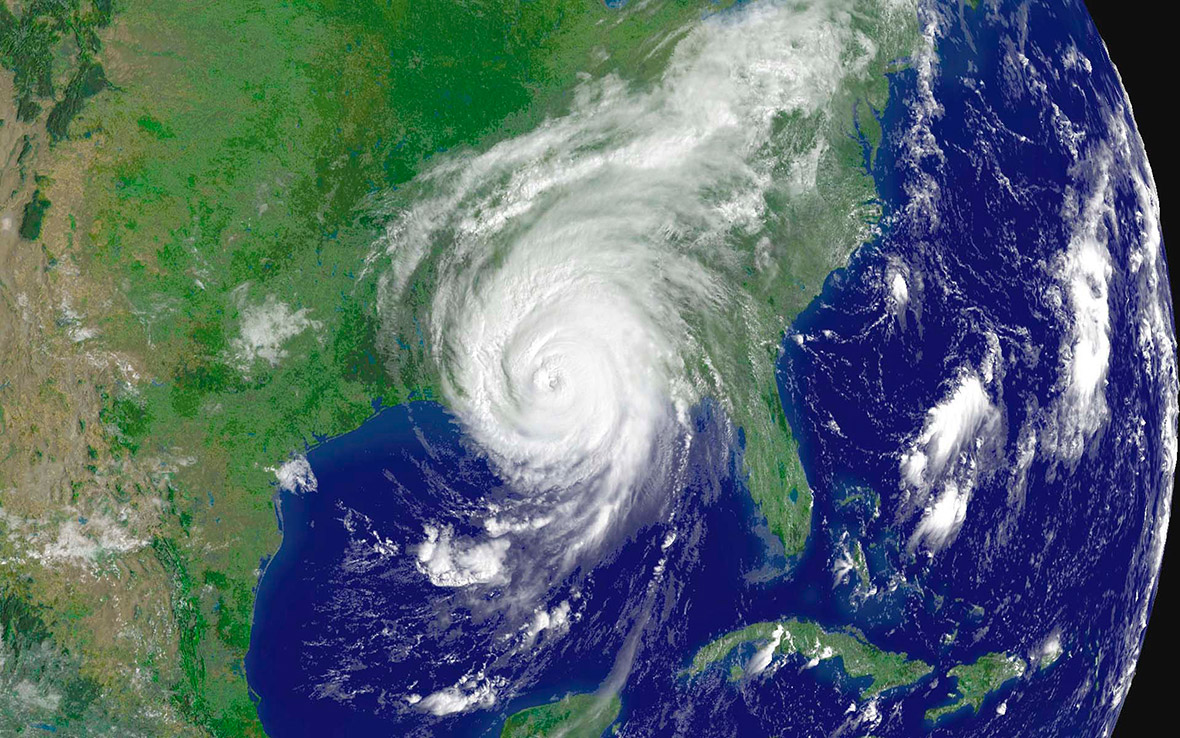
Hurricane Katrina

Sunday, February 21, 2016

Praying to all the Faces of God

In a previous post I have described my written prayer practice, and also in other writings I have talked about my struggle decades ago to figure out to what God did I pray?  How did I start my prayers: Lord... as I had been taught (but felt so wrong),  Creator, Father, Mother, Protector, etc?  Each name felt incomplete and lacking while still also rich in its own right.  I eventually came to understand that God was a name for calling spirit as a noun, but not who I prayed to, and that no name was complete and all were valid.   I learned to pray by feeling into how I was experiencing God at that moment and calling out that name.   Curiously my written prayer practice as previously described does not call out to any name of God.

This weekend I realized that what has been missing in the last year of my prayer life has been the part that has to do with laying a burden down, giving things that trouble me over to God, not trying to be my own All powerful Being!   As I was trying to reflect on how to weave that successfully into my prayer life I realized I need to pray to all the faces of God.  I am going to interweave the steps that have been part of my practice with actually calling out to the faces of the Holy One in the following way.  (They are in a different and better order now)

Dear Provider:   This is the face of God for me that is God as Abundant and Provider of all Blessings.  So just as I have started with naming my blessings, now I will thank the Provider for those Blessings and that Grace.  I may even add on here prayers to the Holy One which for me is about the awe, wonder, beauty and mystery made by the Creator.  So I may also give thanks for that level of blessing here.

The second motion of my prayer practice has been to identify the worst event of the day and ask the magic question "How can it get any better than this?"   That question has helped loosen my despair and attachment to the stuckness of things.  It has allowed me to see possibilities and to be open to change.  However it has been sadly devoid of God. So now I will pray:

Aba:(or Father): This is addressing to the listening and loving God - a naming of the struggles and burdens of my day.

Dear Transformer:    By praying to the source of all transformation and asking the above magical question I can notice better that it is God who enters that difficulty and loosens and transforms it.

Mother (or Comforter):  This is the place where I used to notice whether I was in fear or love (which I eventually stopped doing because I was pretty much always in fear which just got discouraging.) By turning to the Comforting God is where I can now begin to lay down my burdens and my fears.  I have an image of crying in the Mother Gods arms, or laying upon her breast like when I lie on the sand of a beach.  I can even take this one step farther and call out to My Rock if I need to be anchored and grounded for challenges ahead.

Dear Creator:  This is where I usually say prayers for others.  I have said those as Thanksgiving for that which already exists in the mind of the Creator even though as I make the prayer it has not yet happened.  For example Thank you for Carla's new job.  So these prayers of Thanksgiving I will make specifically to the Creator in the awareness that it is the Creating force that brings these.

Gardener:  I am adding this one in.  I'm realizing I need to ask The Holy Gardener to root out, to weed from my soul that which stands in the way of other healthy growth and life.   I need to ask that One to also plant seeds where s/he sees fit and where I may not know to even ask!  This face of God is helping me to notice the need for humility about all that is unknown about the human journey.

Lover:  This is to call in the face of God what loves me...a face I have been sadly disconnected from my whole life.   (I did not grow up in one of those churches that sang hymn about "Jesus loves me this I know", or how "God loves all the little children of the world".)  I have always believed in a loving God but somehow that did not really translate in to noticing that God loves me specifically.  It will be good to pause for a moment in this prayer process and simply feel that and let that in.

Dear Source:  This has been the place where I have set spiritual intention for the next day (to walk in love, to forgive, to be grounded, etc.)   But again I must notice that all of my intentions must connect to Source or else they are but vain and puny motions of the ego.

And even as I sit back joyously prepared to pray a new I am aware that in another year, or more? or less? Spirit may move me to pray in yet another way as this is a process within the soul, not a practice graven in stone.

Sunday, January 31, 2016

Holy One

Holy One:

Please take this burden from me.
Allow me to lay this down -
to give it into your care and your wisdom greater and deeper than my own.

Allow me to rest in your arms like a child in one's Mother's arm,
Like a shipwrecked sailor tossed up upon your shore.
Let me sleep knowing that what ever comes you will be with be with me, with us unwaveringly
not in perfection, not in everything being fine or without trouble - but that you will be with us
as our Comforter and our Teacher.

Teach me in this moment.
Help me to understand what you would have me learn here
Teach me to make sense out of the missed turns and broken dreams, the series of disappointments that make up this life, that make up all human lives.
Grow me
Grow me into a more perfect disciple of your love,  a better vessel of your message.

Heal me.
Heal me of the scar tissue that acts as a barrier to the new or the now.
Heal me of the fears rooted in the past and bring into the present with you.

Forgive me
Forgive me for my timidity that has kept me from action or faithfulness.
Forgive me for the actions I have taken in anger or in hurt that were not as you would have had me act - that were not pure.
Forgive me me from the arrogance of thinking I had forever, for tarrying and wasting precious time, for false priorities or missed opportunities to draw closer to you.
Forgive me for when I forget you and live completely in the Kingdom of Man rather than your Kin-dom.

I would ask you to be with me, but you have already promised me to always be with me.
So open my eyes so I may see you clearly and without fail.
Hold me in your gaze, so I am not wander into the veil of forgetting.

Show me what you want me to do.
Make sense for me out of these confusing maze of life events.
Does this mean stop or does it mean try harder?
Does this mean rest in solitude or does it mean wait for your companion?
Your language is hard for me to understand - help me to hear clearly your intent.

Sunday, December 27, 2015

Spiritual Resources

Note of apology to readers:
To those of you who subscribe to Seeking the Spiritual Life, you may have wondered what has happened to the author and the postings?   My goal has always been to post once a month but even in the good years I have posted 10 a year...but this year I'm on track to post 5 - yikes!  And nothing posted since June.    I have actually been in a spiritual tangle (watch for future posting on that issue) and it has interfered with my ability to write for my blog.   But I believe I have untangled myself and will be back in 2016 with more to say.

Spiritual Resources

Today I sat with a group of people as we shared with each other what our spiritual resources are - what the books are that we turn to every time for spiritual nurturance, inspiration or uplift.  All great religions of the world have their own sacred scriptures.  But why be limited to only one source of spiritual enrichment?   Many of the people in the circle shared the same thing - that they had texts they had read all the way through and found inspiring, and now kept in a place of prayer.  They shared that they would open them randomly - trusting that they would be lead to just the right page, and that in fact it did feel that they were lead to just the right bit of wisdom.    So I share with you here the pile of books that lives on my bed stand and a little bit about why (in no particular order).   If you have not read these, then here is some 2016 inspiration for sure:

Illusions by Jonathan Bach...yes this is actually a novel.  But it is a novel about a man on a spiritual journey who is given the "Messiah's handbook"...the quotes in the "handbook" are as meaningful to me now as they were in 1989 when it first came out.   Pages that are not the handbook still point me to the ideas the book contains.

Emmanuel's Book I (or book II) compiled by Pat Rodegast & Judith Stanton.   My best-friend sent this to me as a gift, also in the 80's, with a sort of guilty note about how she did not really believe in channeling (the whole book is channeled - the authors are simply a medium and recorder of a spirit named Emmanuel.) but that she found great spiritual truth's in the book and thus found it useful to read.   I would heartily agree with this.   In other words I don't really understand how channeling would work, but when I hold the words in the book before my truth meter - the words ring true and consistent.    Very complicated spiritual issues are addressed since the audience got to ask questions and the answers are what are recorded.  I found answers in here early in life that helped ground my spiritual journey.  There were things I have not worried about because these answers worked for me.

A Testament of Devotion by Thomas Kelly.    Thomas Kelly, a Quaker, wrote this book in 1945 as WWII was ending.   One would think this would make it dated, but his mysticism and ecstatic expression of God is so profound as to be timeless. (The only way it is dated is somewhat gender heavy language.)   A brief book with just 5 chapters...has to be read slowly, or over and over, to take in its richness.  The chapter On Holy Obedience speaks profoundly to a life of leading and faithfulness.   The chapter on Simplification of Life speaks to the need to slow down and to be faithful - to strip away distracts and false idols.   The chapter on The Eternal Now and Social Concern probably saved my life since I read this in my 20's.  Kelly states: "I dare not urge you to your cross. But He, more powerfully, speaks within you and me, to our truest selves, in our truest moments, and disquiets us with the world's needs.  By inner persuasions He draws us to a few very definite tasks, our tasks, God's burdened heart particularizing His burden in us."  In this passage and throughout the book Kelly helped me to know that I did not have to fight every injustice, I had to listen for what the part God wanted me to do was and simply be faithful to that.   Without his words I indeed would have died on way to many crosses that were not mine.

The Power of Intention by Wayne Dyer.   Over the years various Wayne Dyer books have been on my bed stand, but for me the gold standard is this one.   Dyer describes Co-creation or manifesting, but in away that avoids the materialism and self-centeredness of the Secret.  He also describes a helpful spiritual posture and some of the obstacles that get in our way as we try to do this.

The Prophet by Kahil Gibran  This book has also been on my bed stand since my 20's.  For those who came of age in the 70's or 80's this book was so commonly referenced by people as to be rather clique and therefore then disregarded.  However, I have found that those currently in their 20's and 30's are not aware of this book and that is frankly a great tragedy.  Again this book holds such wisdom about 27 different subjects (the key and central areas of life from love, to food, to freedom) in just 1 to 2 page chapters about each - as to inform one for a life time.   My ideas about marriage and child rearing and work have all been permanently and much to the good impacted by Gibran's timeless wisdom coming to us from 1923 Syria.

Happier than God by Neale Donald Walsch.   Walsch is better known for his series of books: Conversations with God (I, II and III).   I have read those and several other Walsch books, but this one is my favorite.   I hate its' title, and yet the book chose me.  I stood in front of a shelf of books by him, closed my eyes and pointed, landing on this one.  I winced and opened it to several different pages and knew that indeed I would need to purchase it.   This book is also about manifesting - but mostly about manifesting a God filled life.   Also Walsch, unlike all other books on manifesting that I have read, does not turn away from the fact that we live in an unjust world, or fail to mention that.   The book is also supremely positive.

Previous inhabitants of the Bed stand:
I have of course over the years had to remove some to make room for others, but I thought the previous ones are worth a mention here.  As noted above other titles by Dyer and Walsh.
The Bible...for obvious reasons.
The Tao of Pooh by Benjamin Hoff.   Hoff quotes from Winnie the Pooh throughout this book while relating it to Toaist teachings.   Both amusing and thought provoking.
Hind's Feet on High Places by Hannah Hurnard - this is an allegorical novel about a journey which takes place on many levels.  Heavily Christian imagery.   It has many allegories that speak profoundly to the spiritual journey.  I eventually removed it because some of the "obedience to God" part seemed to describe a kind of God and a kind of discipline which is not how I now conceptualize God.

Happy Reading.   I would love for readers to post a comment sharing their favorite spiritual source and why.


Tuesday, June 30, 2015

Sitting with the World's Suffering

"I'm sorry I just have to rant", she said.   And then she went on for some minutes about the death penalty and about our droan policy, and about ISIS and how we condemned them for killing while the US engaged in both kinds of killing.  "It is hypocrisy!", she ended.    Then she asked me how one sits with this sort of horrible thing, and what is wrong with humans that they act so ignorantly?  I have been known to have my own such rants, so I was sympathetic to her anger and turmoil.  But the question she asked me was far more important.

I have come to this belief through a variety of interlocking and reinforcing teachings and could not even recount exactly how, I can only say what I believe, but I think it is probably worth sharing.

We come with free will and not all of us are tuning into God and making choices that are aligned with the highest truth available.  But it is almost like souls also follow developmental stages - young souls learning about scarcity, violence, addiction, appropriate and inappropriate uses of power, etc. Perhaps slightly wiser souls learning about cooperation, giving, receiving, closeness, etc.  and eventually the Bodhisattva souls who have come back just to help others.  What this means to me is that within a particular life time people may be born into wars, or gang violence, or addiction, or political dramas as part of the lesson they are working on in this life time.   Some people maybe come famous actors in larger historic struggles whether they come as Rosa Parks or as George Zimmerman.  They are both working on their own personal lessons about (in this case) race or violence/non-violence - but they are also helping these themes be held up to societal awareness and learning.  They are helping our whole society learn about these themes.

Have you ever noticed how certain issues/themes show up repeatedly in your life, others not at all? How certain issues capture your attention completely and others do not engage you?  That is probably not an accident.   I for example have absolutely no interest in addictive substances.   While not wanting to hang out with addicts I also have great compassion for the suffering that they engage, and the struggle to be free of it.  It simply feels like something I have dealt with at some other time.  It is not a concern for me in this life time.

On the societal level I have even heard some argue that the likes of Adolph Hitler, took on lifetimes of suffering in order to offer us a most perfect symbol of hatred, violence and abuse of power - that in a twisted backwards way that was an offering to our collective learning. That by seeing the dark and the ugly we can better see the light and the beauty.  I do not know if I would go that far, but it certainly suggests that the project of collective learning is not straightforward.

So unlike the person above, I do not feel that people who are engaging in violence or hatred, or abuse of power are ignorant.  I simply feel they are human souls struggling with the lessons they have come to this life time to learn.  Granted I may not like their behavior, and in my turn I may rant about it. But when I am in a centered place, when I sit on the banks of the River of God, as I spoke about last month, I simply see the teeming masses of humanity struggling for resources, for love, for connection and for growth.  From that deeply centered place I see that we are all the same.  I may not be a murder, or an addict or an adulterer in this lifetime, but I know I have been in some other lifetime.  I also see that even in a current lifetime of such actions is a person who wants love, who bleeds, who hurts, who yearns.  These are other ways we are the same.

The hard part has been to sit with the pain of the world.  I have known people who have committed murder and rape and I have known people who have had family members murdered or been raped themselves.  I have known people who have lost family members in war (well even people whose last life time was to die in war) and I have known soldiers.  Their suffering has been equally real to me. It stopped looking as simple as the victims and the perpetrators.

One of the greatest gifts of the little Buddhism that I have learned is to learn how to breathe it through - breath the suffering through.   A practice I first learned from Joanna Macy, who is a Buddhist and and environmentalist.  In this practice you see the suffer you breathe it in, passing it through your heart with compassion and you imagine it leaving a whole in your heart and your chest and returning to the world.

A friend of mine recently talked about "spiritual bubble wrap".   She was talking about the ways in which we insulate ourselves against the suffering of the world.  How we turn away from stories like the next mass shooting where innocent people have been gunned down for simply being somewhere. We go numb.  We do not want to feel. Before learning breathing through I would deliberately turn my attention away from certain stories, certain kinds of suffering which felt like too much or "not my issue".   I still do this sometimes.  

But one day after a week of Joanna's workshop I had the radio on and the story came on about the sentencing of the police officers who during hurricane Katrina shot several black people on the bridge in New Orleans.   I started to turn away from the story, to put on the spiritual bubble wrap, but then I remembered to do the breathing through.  When I could do that I could notice the sadness of the racism so thick in our society that the police walk in fear of Black people, I could feel pain for the Black people who had already lost their homes and now would loose their lives or limbs because of racism, I could feel the sadness for the people of New Orleans effected by the climate change we have collectively brought.  and I could breathe it through.  Somehow it was less painful when held in compassion rather than sealed out with bubble wrap.

Buddhists have a loving kindness meditation.  It starts with sending love and compassion to yourself, then to your family or loved ones, then to a friend, then to an acquaintance, and then to a stranger and then to someone you are angry or upset with, and finally to the whole world.  This for me is simply another way to sit on the banks of the River of God, another way to breath it through.  Somehow remembering that we are all just struggling to grow into our better selves, our greater soul, the collective consciousness, really helps me be with the suffering that is this world.

Sunday, June 7, 2015

Sitting at The River of God

In my last post, I mentioned Michael Singer's book The Untethered Soul -- how good he is at bringing Eastern ideas of meditation or mindfulness to our Western minds.  In the first two chapters of the book, Singer patiently explains how there is a constant stream of noise going on in our mind. In fact in the second chapter he, to my amusement, refers to "the roommate" - the voice that is always talking to us.  He invites us to really observe that voice by imagining it as a roommate who sits on a coach, and to listen to what is it saying to you?  I have previously been taught by meditation instructors to watch my thoughts, to label them "thought" and return to breathing. This frankly seemed like an endless, pointless, and not very useful process of noticing that as I am still breathing and thus also still thinking. But Singer engaged my curiosity about noticing "but what am I thinking?"

As a therapist I am aware from the different avenue of Internal Family Systems Theory (a modality which I practice) that we all have "parts" within us: a very effective project manager, a wounded child part, a nurturing parent part, etc, etc, and that these parts are not always in accord. (Yes this is not the same as someone having the diagnosis of multiple personality disorder.)  In fact the most common reason why my clients can get stuck is two parts inside them are at war, literally, with each other.  Singer invites us when we are upset to notice "who is upset?"  (He would argue that none of our parts are our true self.  IFS would argue that all of our parts are our true self, but that we function best when the parts work in concert rather than randomly and independently).  IFS would suggest that when we can notice which part is upset that we need to step into an observing part and learn to speak for a part, not from it.   An example of this would be the difference between speaking from a hurt child part and saying to a spouse:  "I hate you" vs speaking for that hurt child and saying "When you ignore me I feel hurt and unloved, and it makes me angry with you."

Interestingly, Singer also suggests we go into an observing part, and that from that place we can release being in the drama of that part.  Singer says: 
"The process of seeing something requires a subject-object relationship.  The subject is called "the Witness" because it is the one who sees what's happening.  The object is what you are seeing, in this case the inner disturbance.  The act of maintaining objective awareness of the inner problem is always better than losing yourself in the outer situation.   This is the essential difference between a spiritually minded person and a worldly person."
His reference to the spiritually minded person and the worldly person is interesting to me in how often Christianity makes the distinction between God's kingdom and worldly kingdoms - or the powers and principalities.

He goes on to say:  "There's a separation between you and the anger or the jealousy (or substitute any emotion here.)  You are the one who's in there noticing these things.  Once you take the seat of consciousness, you can get rid of these personal disturbances.  You start by watching."
As my friend, Scott Gaul, has mentioned this seat of the consciousness or this witness, is not just a place in the brain, it is actually the place of our soul.   Think of that: your soul is observing your life.  Sometimes very passively without you having any real awareness of it, and sometimes like in meditation very distinctly so.

I have written elsewhere about my own experience of what I call "the river of God".   This for me is an experience of going out to a wide lens shot, of sitting on the river bank of humanity, and looking at the teeming masses, the abundance of nature, the dramas of human life: birth, coming of age, marriage, illness, striving, conflict, love, and death as God views it.  Being quite and observing it all.  Not from judgment, not from intervention, but as witness to the eternal aspects of life itself.   From this vantage point I can let go of my own knot of emotion, my own 'caughtness' in the dramas of this hour, this day or this year.  Things drop into perspective - they may still be "issues", but no longer ones that grip me by the throat.  For in fact with a wide enough lens we realize that all issues are temporary - even those which are life and death - are life and death of this one life time.  When I can remember to do it (and that is the catch to all mindfulness) it is a reliable way for me to enter into my observer part, or to my soul sitting in the lap of the divine to watch life itself unfold.

Knowing how profound and how comforting that experience of being in the witness position is, has brought me full circle from the part of me fairly disinterested in the encouragements to watch my thoughts and label them "thought" to an appreciation of the power and groundedness of stepping out of my thoughts and emotions, to observing them.


Monday, April 20, 2015

Samskara

I have been reading the book The Untethered Soul by Michael Singer.  Singer explains aspects of meditation in very Western ways, thus making it very accessible to the Western mind.  In the book he explains the Sanskrit word Samskara in the following way:” a Samskara is a blockage, an impression from the past.  It’s an unfinished energy pattern that winds up running your life.”  As a therapist this fascinates me because I know that when someone goes through trauma they wind up with PTSD.   I would describe PTSD much the way Singer describes the trapped energy of Samskara “When a Samskara is stimulated, it opens like a flower and begins to release the stored energy.  Suddenly, flashes of what you experienced when the original event took place rush into your consciousness – the thoughts, the feelings, sometimes even the smells and other sensory input.  The Samskara can store a complete snapshot of the event.”  This is exactly how I would describe PTSD, (minus the flower opening – way to beautiful a description for a PTSD flashback which is usually very painful.) 

 In the therapy community it is usually acknowledged that there is big T trauma (near death or annihilation of self experiences) , but that all of us have small t experiences: experiences of loss, humiliation, fear, hurt that we also carry inside us.  EMDR (Eye Movement, Desensitization and Reprocessing) is considered the treatment of choice for PTSD.   It is a process that through bi-lateral stimulation (rapid eye movement right and left, or tapping right then left side of body rapidly) while focusing on the trauma memories creates a brain state that allows the person to re-evaluate the stored painful memory and release the negative conclusions and patterns that have been accumulated over it.  Singer describes how through mindfulness one can watch our energy, can watch how certain stimulate trigger old memories and feelings (Samskara) and rather than blocking off to that which is arising one can simply notice and release it.

This all related in an interesting way to a spiritual issue for me.   My ex-husband was a pathological liar and an alcoholic.  As a result much drama and painful experiences took place, especially involving ways he brought our young daughter in to his dramas.  I worked over and over to forgive him because I did not wish to carry anger or pain with me (or Samskara would be a better way to explain it).  But every time I did a new incident would occur.  I eventually felt he had created spiritual damage to me.  (I did not have words for it, but it was Samskara; I was aware that I was less trusting and less open hearted and I was sad about that.)  I have watched my daughter grow into an open hearted person and felt fear for her as to what injuries she was leaving herself open to.

As I sat reflecting upon all this, trying to see how to open my heart and release these hurts and noticing my own resistance, I watched the familiar litany of complaints against him; the unalienable sense I had arrived at 25 years after knowing him that I simply could not even interact with him any more because it was so toxic.  But this time I tried to just “observe it all” just notice it all.   Suddenly I noticed with my now adult and completely amazing daughter sitting beside me that one of the greatest experiences of my life has been being her mother.   I realized that without him in my life I would never have had this experience or have know this amazing soul!  I realized that I had closed off the energy, held the hurt because my relationship with him had started (like all do) in beauty and hope with a promise of a great witness to all around us about redemption, and then it felt as if he had betrayed all that promise in trade for a bottle of alcohol.  It felt like the limb I had gone out on in marrying him (risking the disapproval, judgement and rejection of all kinds of people) had simply snapped off.   I realized that it was my own attachment to the picture of what I thought my marriage would be, and subsequent stubborn refusal to re-evaluate it for anything other than him “ruining” what it was suppose to be, that had kept me from noticing what the event really was: the introduction of a great blessing into my life – my daughter.

I reflected as well on earlier Samskara from earlier in my childhood which also set me up to push against life’s hardships rather than soften, observe them, notice their gifts, remain unattached to them, etc.   So the spiritual problem of forgiveness which I have struggled with for years, turns out to be more about staying open to the moment, releasing my preconceptions or expectations, being willing to discover what life is really presenting me, not what I ordered up or wished for.